Establishing the All-In-One AI Catalog
Deepgram, the voice-solutions expert that are known for the early usage of AI Speech-To-Text, Text-To-Speech, and Voice Agent APIs, was looking for a way to feature the rapid-growing catalog of AI-powered services in one place. There wasn’t necessarily a shortage of competitors trying to do this very same thing, but the results we found either had a poor search experience, didn’t give good explanations of what the services actually did, or were just plain frustrating to use. Using the authority in the AI space, we felt like Deepgram had the perfect voice to make this dream possible.
How We Put It All Together
Looking up to Marcel for the past few years (we worked on various projects while he was on the team at Scale and UpKeep), I was incredibly excited to work with him again. Along with the entire team at Deepgram, I new the designs had to be not only beautiful, but had to have SEO-minded concepts at the forefront.
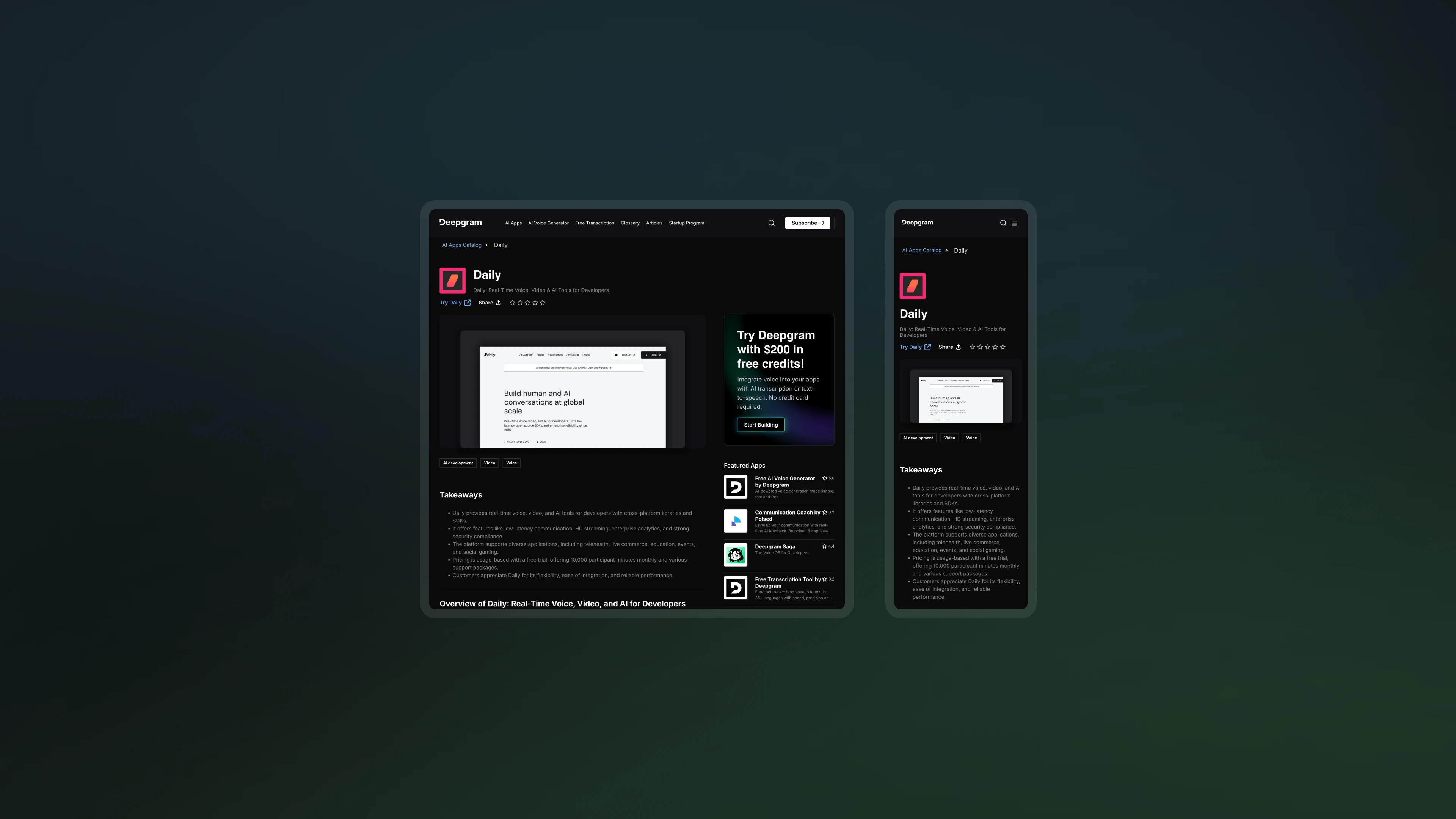
We had a few tools that we were using to help us gather data, which helped us determine what we could actually put into each detail template. These tools were able to grab us company logos, brand colors, important links, in addition to important overviews, review sentiments, and pricing information. Once we knew that we could pull all of these together consistently, we build what we believe to be the perfect shell for all of this information.
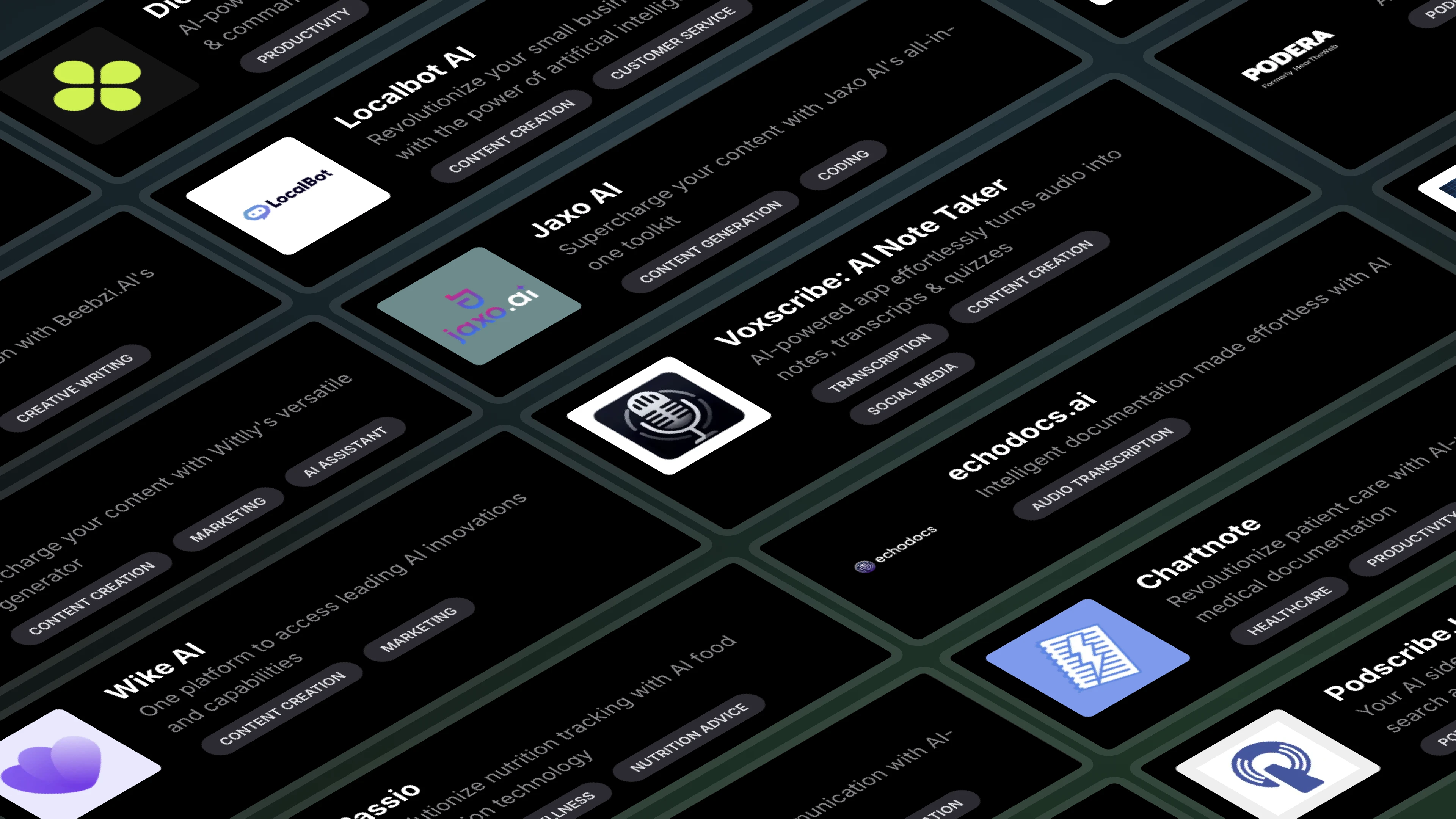
The one big problem we kept running into was the logos pulled from these services. We couldn’t guarantee that the logos would work well on a dark or light background. Adam Garling (the developer on this project) went to work on finding a solution to automatically determine if the logos were dark or light mode, noting this in the system, and then finally using the appropriate template.
Working in tech, and knowing users are probably scanning through tons of AI services every day, we know that information overload is an issue.
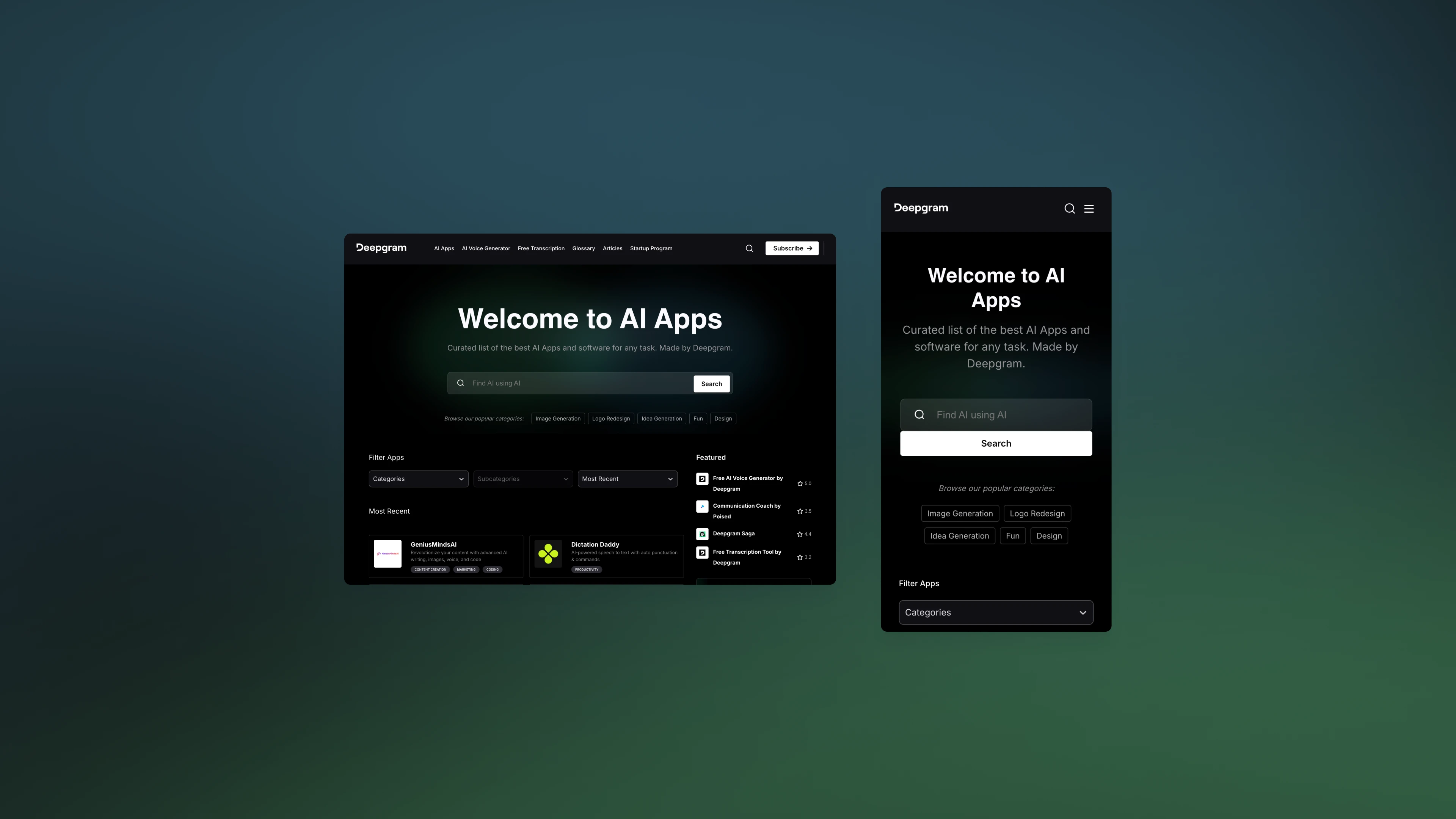
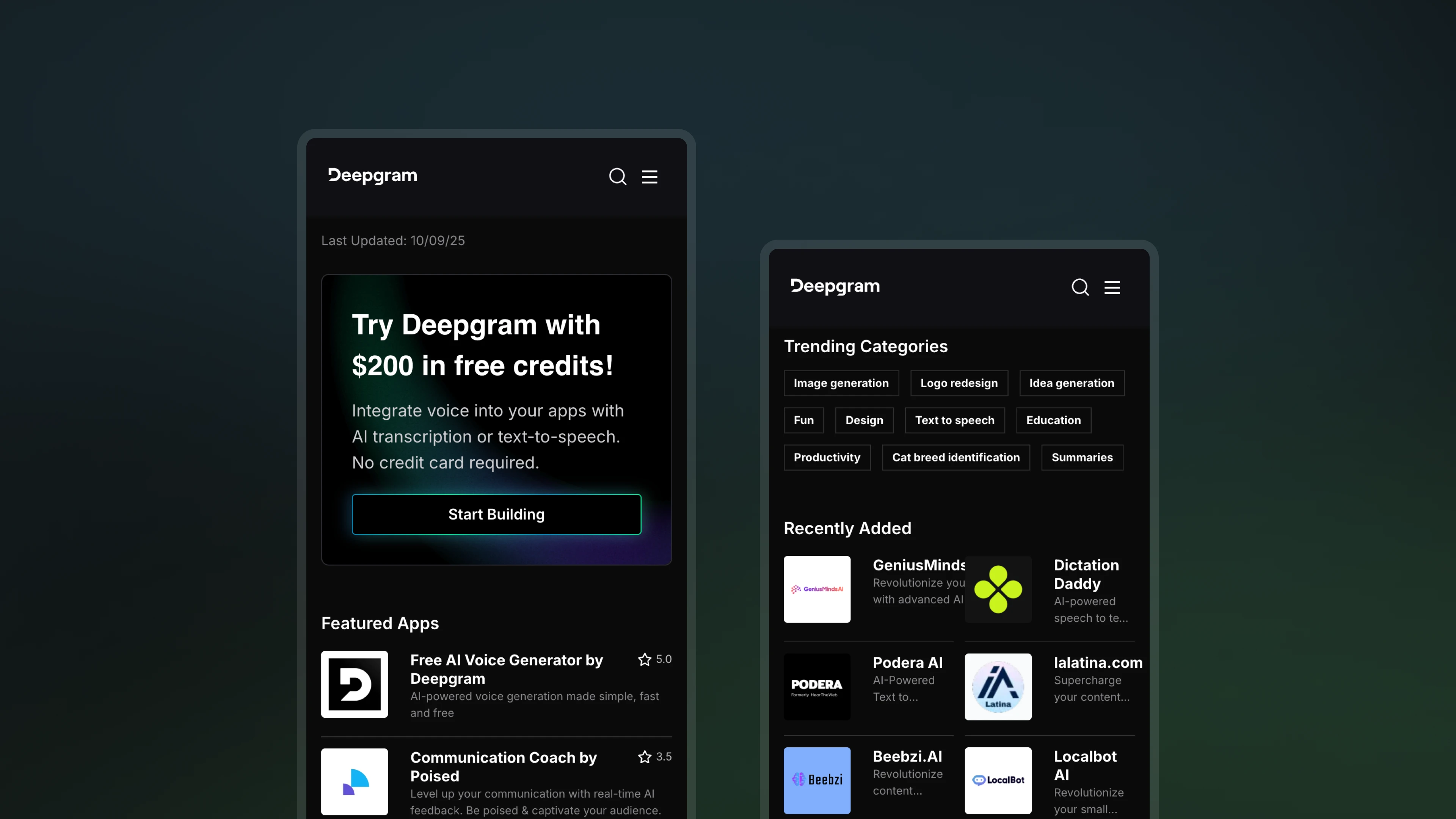
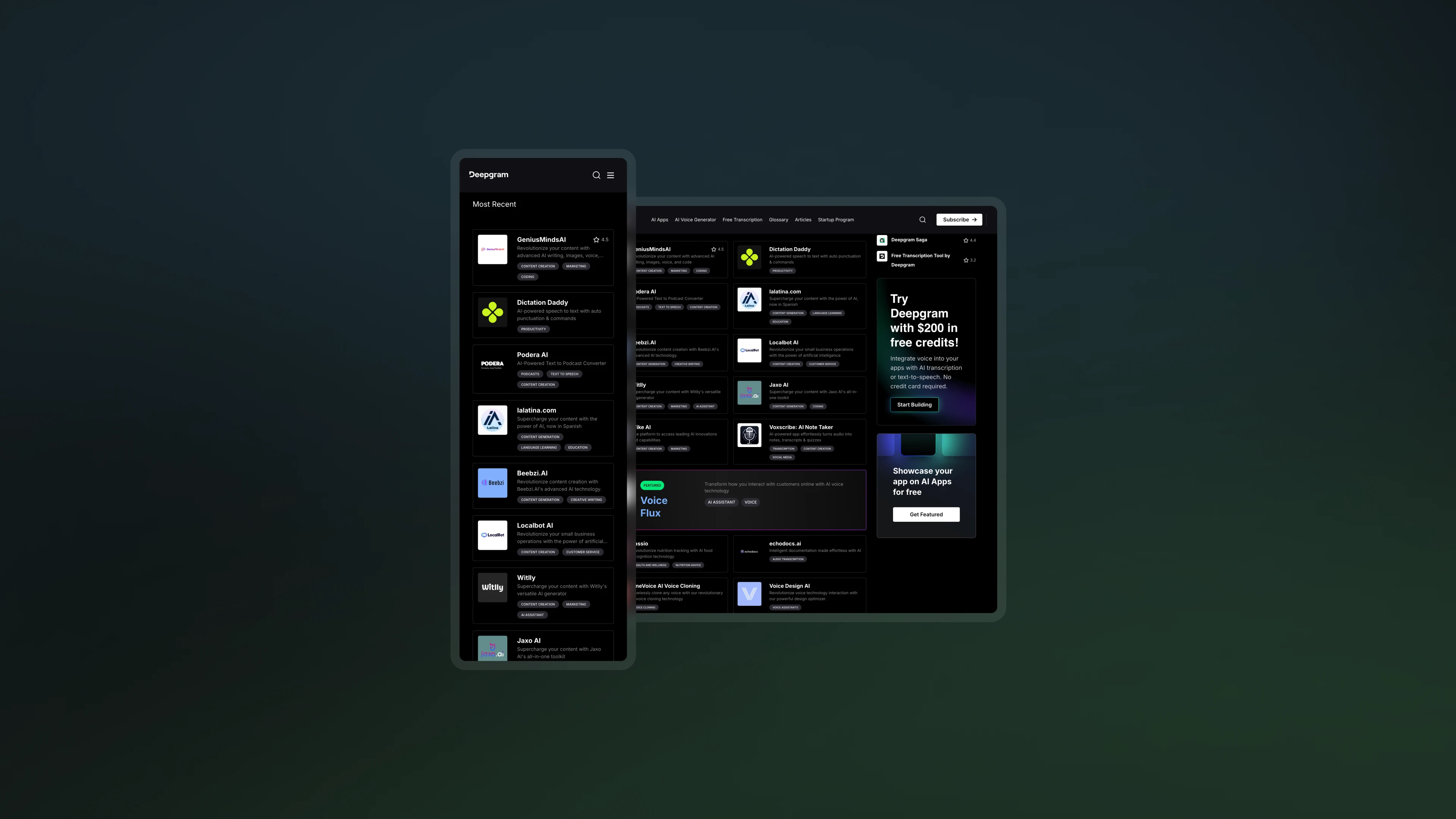
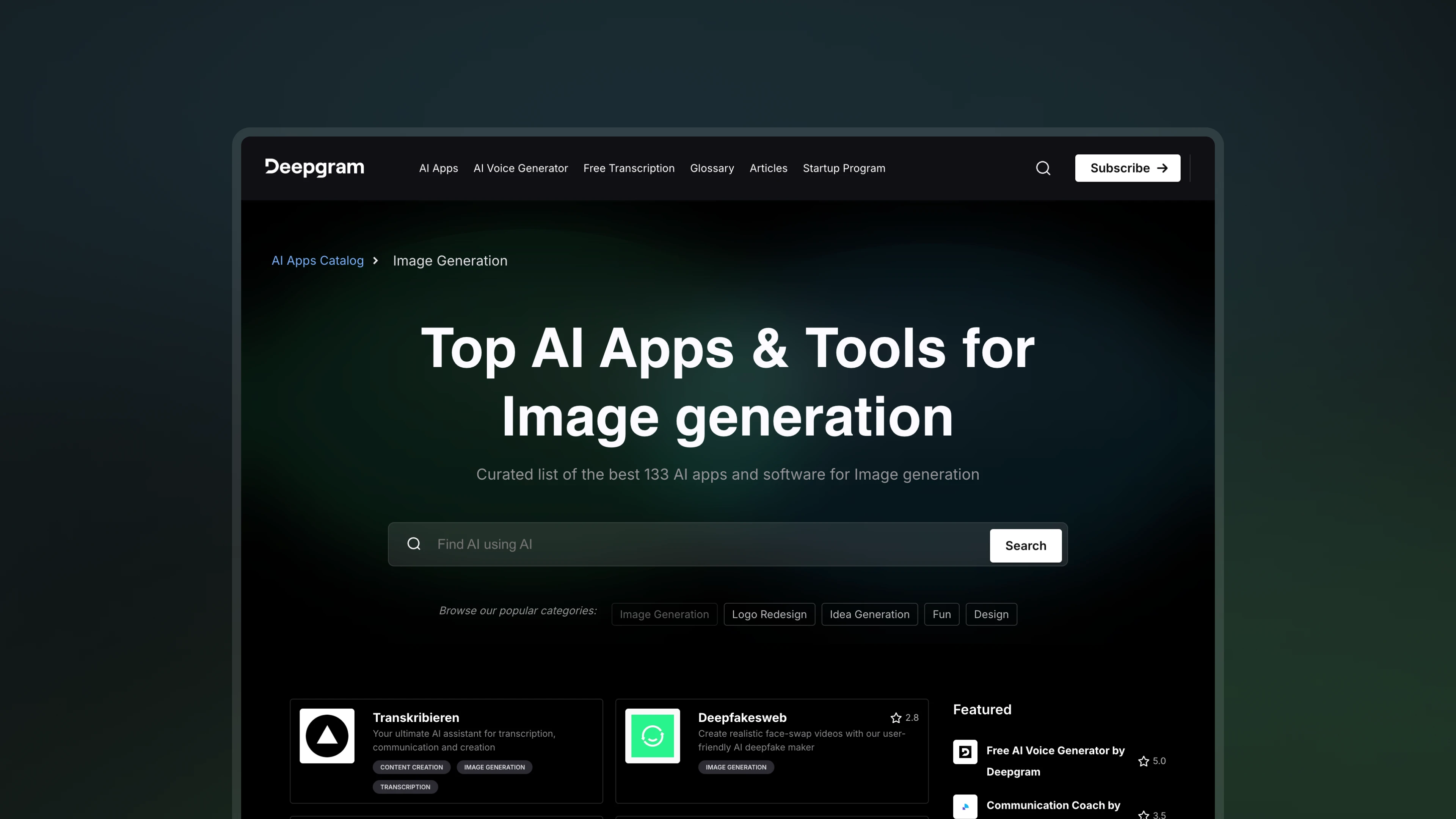
Knowing this, we decided to make the templates as scannable as possible by having all descriptions incredibly short and to-the-point. On the sidebars and bottom of the templates, we always offered related or recommended AI apps just in case the user did not find what they were looking for.
Every project I do with Marcel, I learn something I take on to each and every project in the future.
This time around, he was kind enough to teach me the importance of crawlability and backlinks embedded with huge catalogs like what we built. In the design, you can see that not only were related content, links to unique listing pages, and recommendations were made right inside the main content blocks, but links were also added within the website footer. All of these working together helped the overall Deepgram site look better to search engines, and also our users.