The Challenge
Sun Coast Insurance is an insurance brokerage competing against billion-dollar carriers with seven-figure paid acquisition budgets — GEICO, Progressive, Allstate, State Farm. A small brokerage cannot out-spend that kind of pipeline. It has to out-think it.
The assignment: build a digital marketing function that could compete — without ad spend, without an agency, without a team. One person, covering every discipline a normal mid-size company splits across five or six roles:
-Brand, visual design, and UX design
-Front-end development and site architecture
-Content strategy, copywriting, and editorial production
-Technical SEO, on-page SEO, and keyword research
-Conversion flows, rater integrations, and CRO
-Analytics, attribution, and reporting
The goal was not to "do some marketing." It was to build a durable, compounding channel that produces qualified leads in perpetuity — one that doesn't disappear the moment the ad budget dries up.
Strategy
The strategic bet was simple: in a vertical where every competitor is paying $20–$40 per click on Google Ads, the company that owns the organic real estate for those same queries wins on unit economics. Every organic click is a click the company doesn't have to buy.
Three Pillars
1. Own the research phase. Rank for the informational queries buyers type before they're ready to quote — "does florida require boat insurance," "how much is boat insurance," "boat insurance requirements by state." These users become commercial-intent users 30–90 days later.
2. Lead the state-by-state market. Florida first (home market), then expand into every coastal and lake-heavy state — Utah, Hawaii, Alaska, Arizona, Colorado, Oregon, Washington, California, Texas, Nevada. A single article per geography, each built for local statute accuracy and local intent.
3. Separate informational from commercial. Use editorial content (blogs) to capture research intent. Use landing pages with raters and quote CTAs to capture commercial intent. Never let them cannibalize each other.
Execution
Every deliverable was produced in-house — strategy through shipped code.
Content Production
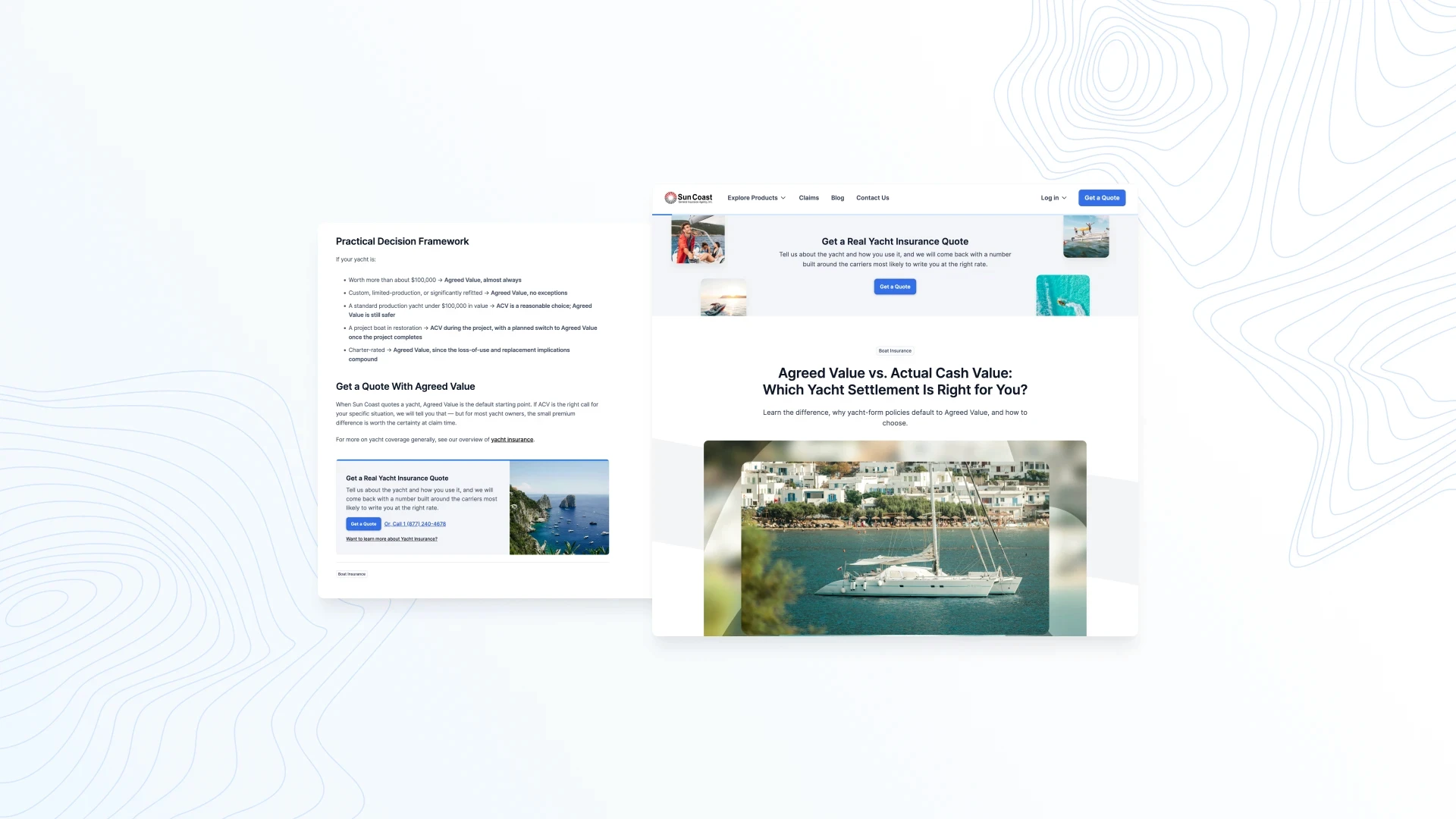
Researched, outlined, wrote, edited, and published a state-by-state boat insurance article series covering Florida, Utah, Hawaii, Alaska, Arizona, Colorado, Oregon, Washington, California, Texas, and Nevada. Each article is fact-checked against the state's current insurance statutes, includes structured data (FAQPage schema for rich results and AI citations), and is optimized for both Google SERP ranking and LLM citation — the two traffic sources that matter in 2026.
Technical & On-Page SEO
Site architecture rebuilt around topical authority, with tight internal linking between informational content and commercial rater pages. Core Web Vitals optimized. Schema markup — LocalBusiness, FAQPage, BreadcrumbList — implemented site-wide. Metadata, H1s, and slugs differentiated between research-intent and commercial-intent URLs to prevent keyword cannibalization.
Design & Development
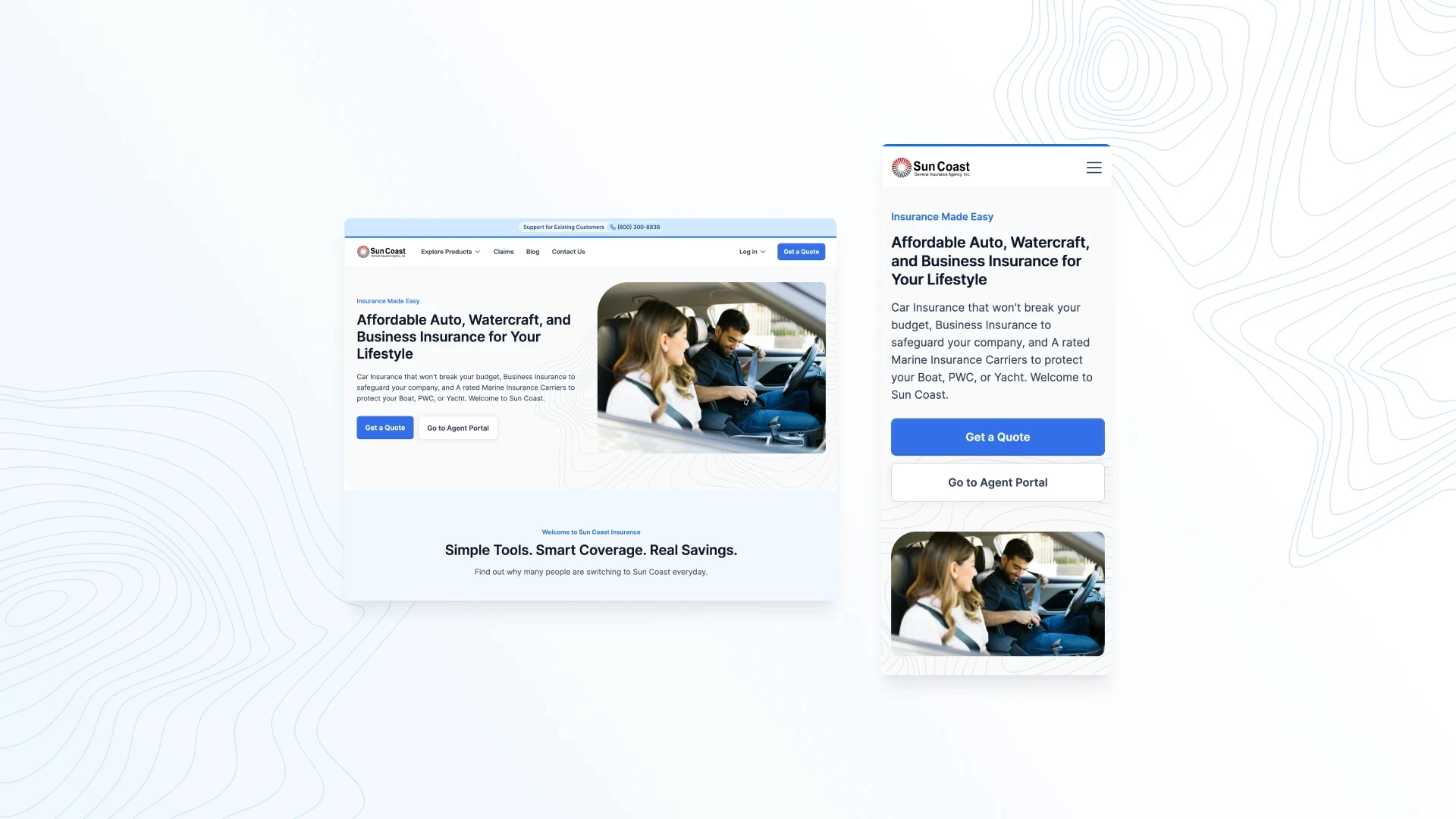
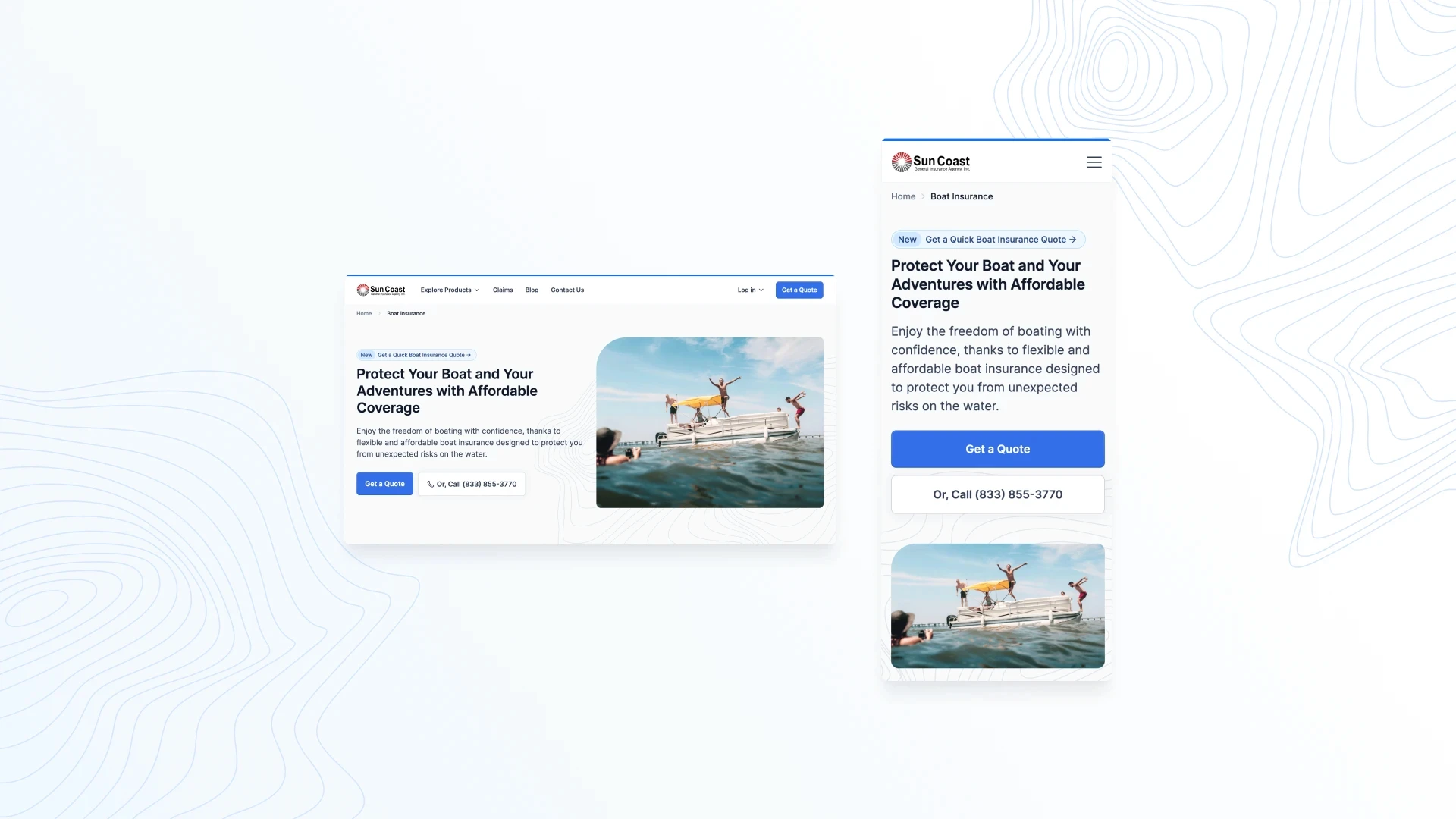
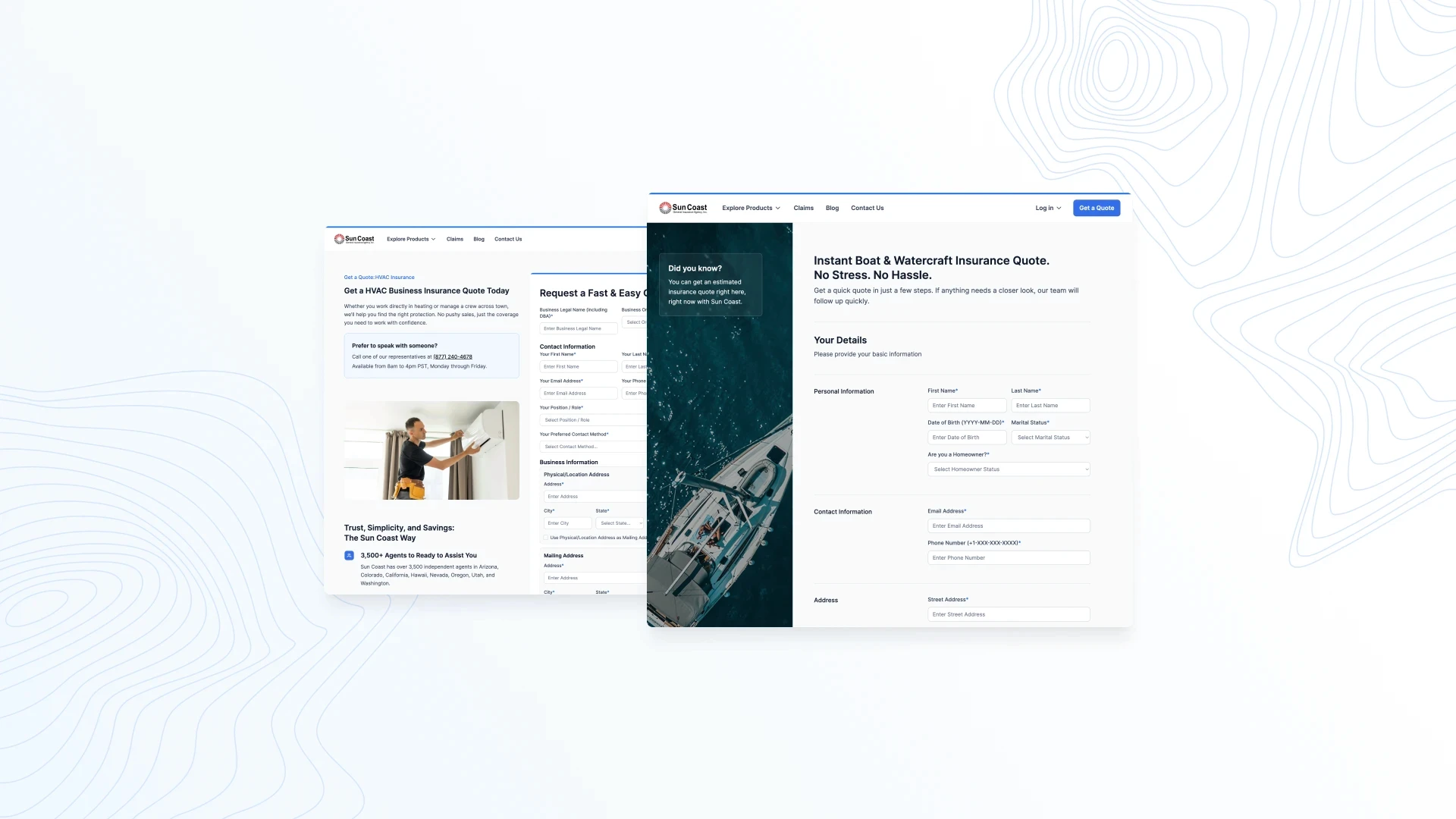
Designed and developed all landing pages in-house. Applied the same conversion-flow discipline used at the agency level — hero clarity, trust signals, friction-minimized quote paths, and rater embedding — without a design team, a dev team, or an agency retainer.
Conversion & Quote Flows
Rebuilt the quote flow to move traffic from SEO-captured visits into qualified quote submissions. Implemented conversion instrumentation, funnel tracking, and an iterative CRO cadence — design decisions are now backed by click behavior, not assumptions.